Sunday, September 26, 2021

Meet Me at the Sandwich House (My Most Healing Metaphor)

I've been planning to write this post for a long time but have been unable to muster the energy to do justice to something so meaningful to me. So I've finally decided I'm not going to try to make it perfect or beautiful. I'm just going to do my best to roughly sketch it out with the hope of building on it later.

There's a place that has become extremely important to me. It's a space of healing, refuge and connection. It can sometimes be quiet and peaceful: a space to think and feel my feelings in a sheltered protected environment, or it can be fun and social: a space to safely connect, laugh and dance around without having to fear the world outside its walls.

Strictly speaking, it doesn't exist, but it's become very real to me, and I'm on a quest to find ways to make it more so. 

In my ongoing struggle to cope with my trauma and all that I've lost because of it, I've always found great strength and sustenance in metaphors. Some of my metaphors are quite dark, but are useful to me in helping me to hold on even in an impossibly painful situation. 

But this one is beautiful to me.

It all started in therapy. Loosely inspired by some of what I'd learned about IFS (Internal Family Systems) therapy, I had a grim vision of the plight of a single "part" of myself. 

It was a little girl part of myself with every bone in her body broken. Her limbs were contorted and her vocal cords severed. She was unable to lift her head or speak. She was in constant overwhelming pain with no hope of healing or functioning. Yet she also couldn't die (as much as I often wished she would). Her only skill was suffering. It was her superpower: there was no amount of it she could not endure. Despite her lack of outward efficacy, the intensity of her suffering had a powerful impact on the rest of me. Her pain could send tsunami-like waves through every other part of me like some unstoppable punishing force. I hated her and felt her hatred of me directed back at me with enormous universe-destroying intensity. Every move I made, every thought I had, took place in her shadow. She would punish me for all of it. In fairness to her, I could sense that from her perspective, any slight movement that I made, every thought, even the slightest breath, would jostle her and cause her pain to increase unbearably. She had to be harsh since even the slightest movement was indeed a threat to her.

And that's where I was when I started therapy: unable to safely do anything, think anything, hope anything, or feel anything because every part of me was at the mercy of her excruciating rumbling. I had to constantly hold her tightly to control her quaking as best I could at the same time as I had to try not to wake her. We were tightly interlocked in the most twisted painful embrace while also hating and trying our best to get whatever distance we could from each other. 

Her rumblings would come through in my everyday life. At one point, my hands would shake when I tried to eat my lunch so much that I sometimes couldn't get my fork to my mouth. 

The other issue was that the broken little girl part of me was not prepared to let anyone help me manage the situation. Any intervention could run the risk of jostling her around further when she was already twisted into painful knots. She couldn't risk it and wouldn't allow me to do so. 

I'll skip a bunch of exposition here and leap ahead to how the "healing" space became possible in the face of this horrible dynamic and what it has meant for me. I found a mental health professional I felt safe in trusting, and most miraculously, she felt safe in trusting. I could feel her soften slightly to give me permission to seek support in that therapy space. This was a big deal because if she didn't feel safe, I would have been punished for seeking help, for allowing someone else to see and possibly painfully, maybe even catastrophically, interfere in our painful complicated predicament.

As time went by, and the space grew safer, I could sense her relaxing a bit more. She still couldn't speak or lift her head, and was still in constant pain, but I could feel her ease up a bit in the presence of support, while listening intently, and eventually seeming to open her eyes a bit to look around. 

Then one day, I described an image that came to me in a therapy session. I felt like there were two parts of me that had been suffering a shared fate. There was the broken part of me I've described, and also another part of me. I described her as an "older little girl part" (though I now wonder if she is actually a younger but less broken part). The stronger part had been carrying the broken one for decades, stumbling over difficult terrain, never able to take a break or put her down. Occasionally, she tried to ask for help and it made things worse. So she wasn't allowed to seek support anymore. 

But looking back on how the support, hard work, and care of therapy had helped me, I explained that it was like those two core parts of myself had arrived at an inn in the midst of the dark woods with a kind, understanding and safe person watching over it. Finally that stronger little girl part of me was able to put that broken little girl part of me down somewhere safe and sheltered where she could rest on a stable, comfortable surface and no longer be jostled around painfully.

The next thing that came to me was maybe a bit strange in its arbitrary specificity, but also very powerful for me: "I have this image that the stronger little girl can now sit down at the table in the inn, and she gets to eat a sandwich!"

In that moment, that imaginary sandwich and the safe surroundings in which it could be enjoyed felt like the most magical thing ever. It was nourishing, comforting and protective.

And that's how "the sandwich house" was born for me. But that's not how it remained.

When I subsequently had to face something difficult, a task that scared me and brought back that terrifying frustrating shaking feeling, I had some inspiration that helped me survive it: I'll just imagine that I've been given the keys to the sandwich house (which I envisioned as sitting vacant between therapy sessions) so I can go there whenever I need to. And I'll imagine that I can take my difficult task to that same table where I'd enjoyed the sandwich and work on it there while the broken part of me is resting on her safe surface." To make it feel more real, I created a music playlist (that I'm listening to now) called "sandwiches and safety" to help summon the felt sense of the sandwich house for me.

I excitedly said to a dear friend (who had entered my life when the idea of the sandwich house had recently come to me), "I have to tell you about my sandwich house!" After enthusiastically explaining it to her in great depth, I joked that I had the keys to it so we could go hang out there and eat sandwiches whenever we wanted. During the day, when we wanted to connect, we'd text each other "do you have time for a sandwich?" and then call each other from that imagined shared space. 

The sandwich house had initially been called into being as a metaphor for my therapy relationship and the safe space it offered me to explore my painful inner dynamic, but it became so much more (while retaining that original meaning as well). At first I saw it as a space held by my therapist that I'd been allowed to enter temporarily while those messed up parts of me rested and prepared for their ongoing journey as they were supplied with tools, nourishment, and care. Then it became a place I was permitted to visit on my own between sessions while the "innkeeper"/therapist was away to access that sense of safety and connection on my own. Then it evolved into a place into which I could invite my friend to hang out with me to share in its shelter and comforts. Recently, my friend and I joked that we had taken over the sandwich house. It no longer was my therapist's space the way it first appeared. It was our space now. My therapist was still welcome there and the sandwich house still represented the safety of that connection, but that was now only one part of its larger unfolding significance.

When my beloved rescue cocker spaniel Layton died in a traumatic way a few months ago (days after a lung cancer diagnosis at the young age of 10), I was devastated. Something that deeply comforted me was an image that came to me of how my dogs (Layton, and also my hound dog Mac, who had died less than a year earlier) had been by the side of those two wandering little girl parts of me during the most recent leg of their difficult journey. I had mistakenly pictured those wandering parts traveling that horrible path all on their own but I now felt certain that my dogs had helped guide them to the sandwich house. I recalled how my dogs had been with me during therapy sessions while I made sure the new setting (that developed into the sandwich house) was truly safe. 

And now that they could no longer be physically with me, that's where they would be. I laughed because I knew exactly what Layton would be doing there while he waited for me: "He is climbing onto the table and eating all the sandwiches!" 

I half-seriously planned to write a book or essay called "Sandwiches and Squeaky Balls" to explore that metaphor in relation to my dogs. I haven't done it yet and it's possible I never will but the idea brought me some strength and solace in my grief.

So that's the sandwich house. When my friends have gone through a tough time, sometimes I've found myself saying, "If it helps you can go to my sandwich house!" and I've tried to explain it but have fallen short. So this is my effort to provide a somewhat fuller (but still inadequate) explanation.

When I think of people who are suffering who feel alone in coping with their trauma, I find myself wishing that I could invite them to visit the sandwich house. I can't promise it will be helpful to everyone but it has helped me so much, so maybe others might find a sense of vicarious comfort there too.

That's the basic, perhaps somewhat silly and childlike idea that has given me so much stability, sustenance, connection, peace, and sometimes even joy as I've tried my best to cope and/or "heal." It isn't some happy perfect ending. There is still so much pain and difficulty, and sometimes the image feels so unreal and far away, but the shelter and beauty that I see in my sandwich house have been so meaningful for me. 

I wish I could have done a better job of describing it since the sandwich house has become so much more than what I've been able to share here, but I just wanted to do a quick update of what to me has been an extremely positive development for me in my ongoing "healing" journey (spoiler alert: the sandwich house is more real to me than the concept of "healing," which tends to be very complicated and troubling to me). 

As for the title of this blog post ("Meet Me at the Sandwich House"), perhaps the sandwich house may not seem like a lot to many people, in which case there is no pressure to join me in the idea. Perhaps you already have an even better space of your own. But if you don't have a place like that or would like the option of stopping by and sharing in mine, please feel free to drop in sometime. The only catch is that you'll have to share your sandwiches with the cocker spaniel who is sprawled out on the table and the dear old hound dog underneath, who will nudge your hand repeatedly until you share. Please tell them that they are such good boys, that I love them very much, and that they can have as many sandwiches as they want.....


-Drawings below of different possible of the Sandwich House by Sadie Kitson ❤️

-Image of Mac, Layton, and Kiki, who are waiting for me at the Sandwich House (along with Persephone, Heathcliff, Lily and Others


As always, please note that I am a lawyer, not a mental health professional of any kind. I have no expertise in trauma or mental health. Also, please note that any opinions and views expressed in this blog are solely my own and are not intended to represent the views or opinions of my employer in any way. 

I am very grateful to have received a 2019 "Clawbie" Award for this blog (which reflects the importance of this topic): https://www.clawbies.ca/2019-clawbies-canadian-law-blog-awards/ 

For some of my external writing on this topic, see: 


For a list of resources that may be helpful in understanding, coping with and/or healing from trauma, please see: https://traumaandlawyersmentalhealth.blogspot.com/2021/02/trauma-resources-very-incomplete-list.html

Tuesday, February 23, 2021

Trauma Resources (A Very Incomplete List--A Place to Start)

I've been meaning to put something like this together since the beginning but have always hesitated because I fear my list not being comprehensive or authoritative enough. I worry it may miss something others may find helpful, or may include something someone finds unhelpful or even harmful.

We're all different, so some of what helps me may not help you. But having a place to start may be helpful for some people, so here are some resources that I'm aware of that may be interesting and/or useful to others. If you feel it may be helpful to you, feel free to review them and make your own decisions about which may suit your needs.

I'm keeping it small for now, and including only those resources that I've either reviewed/used myself or intend to review/use in the future. 

Several of the books on the list, I'll confess, I own but haven't read yet or have only skimmed.

Even the ones that have helped me immensely, I view as resources rather than authorities. It's rare for me to agree with every word someone else writes.  (For example, I previously wrote about how "Trauma & Recovery," my favourite book about trauma, nevertheless caused some harm to me as I explored here)

Learning about trauma can be triggering so please consider your own limits in deciding whether or when to review any materials about it. I've found it helpful to learn about trauma, but have sometimes had to pace myself.

This will be skeletal at first but I will add to it and revise it as I come across new sources (or remember the ones I've previously benefited from).

________________________________________


As always, please note that I am a lawyer, not a mental health professional of any kind. I have no expertise in trauma or mental health. Also, please note that any opinions and views expressed in this blog are solely my own and are not intended to represent the views or opinions of my employer in any way. 

I am very grateful to have received a 2019 "Clawbie" Award for this blog (which reflects the importance of this topic): https://www.clawbies.ca/2019-clawbies-canadian-law-blog-awards/ 

For some of my external writing on this topic, see: 


Sunday, February 21, 2021

"Self-Love" Musings, Why It's Not My Goal

"We must love ourselves, or else...."

"No one will love us?"

"We can't truly love others?"

Speaking for myself, I reject those rules about what love is or must be.

Self-love may be problematic for some of us. In particular, shame/self-loathing can be a core symptom of Complex PTSD, as I explored here.

We may be overflowing with love for humanity and compassion for all sentient beings. Kindness towards others may be the animating principle that we aspire to guide our lives.

Except for ourselves.

It's possible (for some of us, at least) to love humanity and hate ourselves. Or simply exist in a complicated relationship with ourselves that isn't loving. 

I know this because I've not only experienced it in myself but also observed it in others. Some of the most loving, humble, gentle, compassionate, caring people I know are those who struggle with deep self-hatred. Some of these deeply loving people have tried their very best to "heal" that self-hatred. They've perhaps tried to medicate it, and/or "cure" it with therapy, or philosophical aphorisms. But it's persisted. And its persistence has deepened their sense of shame and been used abusively by others to further isolate/blame them. 

I feel sad when people don't love themselves (except for myself, because it's complicated and asymmetrical, as I wrote in the previous post cited above) . I want everyone to have self-love who can (as I wrote here), but those who lack it don't necessarily lack the experience of true, vibrant, rich, deep, meaningful love. And we aren't being kind IMO by trying to pressure, cajole or shame people into believing the love they do get to experience isn't valid and real.

As for those sayings about how we "must love ourselves OR ELSE," it always perplexes me that they never seem to explain why. It simply seems to be taken as self-evident. And maybe it is for some people. If some people need to love themselves before they can love others or receive love from others, I'm not here to tell them they're wrong or that they shouldn't pursue that goal. That may be how it works for some people. 

My own view? It's complicated. And flexible. And personal.

As it happens, I wrote my MA theses (here 🤮) on "the ideal of unconditional love." It was rushed and terrible. It could use many more edits and less pompous convoluted writing. A lot of what I started unpacking there requires further development before it can be useful. I was also only 22-years old. But I did derive some wisdom from the experience, I think. 

Here is what I learned: the concept of "love" (like so many other concepts) isn't something obvious and inert. There's considerable debate about what it means: not only about how we experience it but how we should experience it and aspire to do as it directs/suggests. How we view it may also depend on such complex things as how we view our own and others' personhood, how we construct self vs. "other," and how we orient ourselves to whatever we view as "good." There may be a correct answer, but no one has authoritatively provided it. There is room for differing approaches (which is where autonomy comes in). We can perhaps learn from each other and have constructive discussions, but not simply dictate the answer for each other, IMO.

So with those caveats, my own tentatively evolving view (for myself)?

Love (whatever it may be) is not something rigid and narrow that can be experienced only one way. 

In my view, love can be experienced a variety of different ways. We can experience love in our relationship to ourselves and/or in relation to others. We can even experience it more abstractly and/or generally (love of humanity, love of community, love of life, love of knowledge, love of "goodness").

If we experience disruptions along one or more of the usual axes, it doesn't mean we are shut out from experiencing love and allowing it to flow in and through us in a way that works for us. 

Perhaps we've been so deeply hurt that turning that light towards ourselves is profoundly uncomfortable and maybe even dangerous for us either temporarily or permanently (especially if it's in a forceful pressured way). Perhaps we've had to erect a forcefield around ourselves, because the questions that are raised by efforts at self-love are too painful and disruptive right now. Perhaps we surrendered our sense of self-love to survive difficult things we've been through. Perhaps we focussed on love for others instead because that provided a way forward in the darkness, whereas love for self would have resulted in us needing and/or wanting to give up. Perhaps we were put in impossible situations where we had to choose between loving ourselves and loving others who meant too much to us for us to relinquish our care for them. The ways in which our self-relationship can be disrupted and fractured are complex. Just as the way we may rebuild afterwards may be (as I explored here).

But the good news, in my view, for me and some others I know at least, is that if self-love doesn't work for us, we can love in the ways that do work for us. Our love can be every bit as precious and real in doing so. 

With this in mind, rather than push towards self-love those for whom it doesn't work (does shaming and pressuring people into loving themselves ever work anyway?), we can acknowledge that there are many ways to love, and affirm the value in the love that others are able to experience. 

Self-love can still be cultivated in those who wish to pursue it (I'm sure many will and I applaud it), but it's a personal choice as to when or if to start down that sometimes very difficult path. 

In any event, I did a previous twitter thread on my thoughts about an approach that may work for me, and rather than try to re-invent it, I'll simply post (a somewhat edited/expanded version of) it here:

If you have difficulty loving yourself, but no problem loving others, one thing that *may* work is to love your own capacity for love and its manifestations/activity. I can’t currently "love myself" the same way I can love others but maybe I can love the caring itself. It’s the best part of me in action--not me as object. 


I personally find most of the talk of self-love problematic anyway in how it constructs what is self vs what is other. It just doesn’t work that way for me. In loving others, I can love myself more readily because that action aligns with my values and my sense of beauty, and it's loving what is active and expansive in myself rather than simply loving myself as an object within narrowly constructed boundaries. 


It’s okay to have our own ways of valuing what’s most important to us in our experience of ourselves. We don’t have to accept others’ ways as our starting point. What we most prize in ourselves is ours to choose even if it’s actually goodness that is outwardly directed not inner-directed. 


So I may not be able to direct that love inward in the same way, but I can love that manifestation of what I value and who I am and can shut out all the voices commanding “love yourself.” They don’t work for me. 


That capacity to love those around us is something that can be tended to, cherished and maintained without all the sticky thorny questions that “self-love” as object can involve for some of us. Being made an object may be what damaged us in the first place. 


Anyway, just my own reflections. Sometimes the way these things are constructed doesn’t work for all of us so internal reflection about what may work and what does reflect our values and needs can be important. 


Telling me to love myself as much or more than I love others reinforces a dichotomy that set me apart from others as an object & disconnected me from my basic humanity. And was weaponized against me. Choosing to love more expansively can be gentler & less divisive. 

It’s like my trauma isolated and separated me from others to target me for shame and damage. The solution for me isn’t to focus on myself in that same disconnected conception. It’s to rebel against it and simply love in the ways I still can. And to cherish/value that love without demanding that it do and be more to count as real. 


Me not “loving myself” doesn’t necessarily mean I’m doing it wrong. It means I’m doing what works for me. It’s a form of self-love in its own way too, though I wouldn’t call it that because it reinforces the self/other distinction 


But I totally get that others--if they can--may need and/or wish to focus on the self within those boundaries and create safety there. That’s not possible or palatable for me personally but it makes sense too. When we’ve been ruptured there’s more than one way to rebuild & move on.

It's the beauty of being human. There are so many ways to adapt and survive. Let's not force one narrative on everyone, please. 


As always, please note that I am a lawyer, not a mental health professional of any kind. I have no expertise in trauma or mental health. Also, please note that any opinions and views expressed in this blog are solely my own and are not intended to represent the views or opinions of my employer in any way. 

I am very grateful to have received a 2019 "Clawbie" Award for this blog (which reflects the importance of this topic): https://www.clawbies.ca/2019-clawbies-canadian-law-blog-awards/ 

For some of my external writing on this topic, see: 


Thursday, February 18, 2021

"Us v. Them"

 I originally spoke up about trauma and mental health in the legal profession because I noted a dangerous trend in my profession and others of constantly assuming that members of those professional spaces aren't like the people "out there" who can be traumatized and experience mental health consequences. In the prevailing discourse, professionals who deal with traumatized people are spoken about as if they couldn't possibly have their own trauma. I raised a concern about that kind of "othering" discourse that had harmed me, and also, I believed, harmed those whom we are supposed to help (by wrongly assuming that they couldn't be among us, that they couldn't enter our spaces, that they are inherently "other").

I've written about that dynamic in the context of my own profession and have advocated for a more inclusive discourse.

That said, there's another danger. When the movement to recognize the lived experience of professionals becomes an end in itself, the voices of lived experience trying to explain what it is like to be on the other side of the divide can get erased. The reasoning goes, explicitly or implicitly, "Stop telling us about your lived experience, as if it's something we need to learn from. We have our own lived experience too that we are embracing; therefore, we don't need to learn from you. We've got it covered. Stop forcing an us vs. them narrative!" 

I'm not okay with that either for a few reasons that I'll explain.

Although people with professional status can have their own trauma and can carry that in ways that deserve recognition and support, there are also privileges, power, and other biases that go with that status that can't be ignored.That lived experience counts and deserves recognition, but it doesn't mean the voice of "lived experience" is covered, and no further listening or learning is needed. 

For instance, I know what it's like to experience a substantial amount of trauma, but if I ever had to navigate the legal system with that trauma, it would not necessarily be the same experience as someone with that same trauma who lacked my years of knowledge, training and sense of comfort/belonging there. That's not to say I might not have a difficult experience in many of the same ways others lacking my training would, and maybe even some unique challenges. But I can't assume that my own experience will be like someone else's.

For one thing, someone who chooses to enter a particular profession is more likely to see some value in the way that profession tends to approach things, which is already a bias in itself. They're more likely to see that profession as having something important to offer. While their own experiences may remain a touchstone of authenticity (and even lead them to challenge some practices and biases within the profession), the biases offered by their professional role and education may interfere with them seeing other types of lived experience as clearly. 

More generally, no one's lived experience can erase or speak for others. Many, if not most, of us have some privileges that others lack. Even without special privilege, we all have a different perspective, and different needs, histories, etc. Humility is called for in all situations, especially when we occupy a position of power in relation to others. 

So what about the "us vs. them" dynamic that I've already recognized can be so harmful? Should it be discarded altogether?  

In my view, absolutely not.

Whether we like it or not, when we occupy a role that involves power over others, we need to recognize the inherent "othering"and division that are involved by virtue of the power and vulnerability that in fact exist. While excessive and unwarranted othering needs to be discarded, so we can minimize that power dynamic and its harms, we nevertheless, in my view, still need to recognize the inherent "otherness" to which the more vulnerable party is subject, which will be exacerbated if we aren't careful to humbly examine our role in it. 

We are not similarly situated when we step into those power-differentiated roles. Humble recognition of those differences is essential to avoid doing harm. An ability to relate across those differences is key, so we must always be attentive to any excessive othering that occurs, but in my view this must always be accompanied by an honest and realistic recognition of that divide enacted by that power differential. 

In any event, there is no one "lived experience" voice, even among those who are very similarly situated. Humans are complicated, as I described here

There is always otherness, which need not be a bad thing. When approached humbly, it can be a magical and wondrous thing to learn about the ways in which those around us are not like us. "Otherness" is not inherently bad and should not be constructed as such. 

Our own lived experience may provide all kinds of insights, but isn't some elevated platform or box to tick that ensures we understand everyone else who possesses it. I've written about this before and will again, but the bottom line is I think welcoming lived experience perspectives within professional spaces is important because we should have diversity and inclusion of a broad range of experiences within professional spaces. Those lived experience perspectives can offer value by providing a check against harmful inaccurate stereotypes that might otherwise proliferate. They can thereby introduce greater humility and expanded insight into possible viewpoints and experiences, but never a replacement for listening to those who are directly subject to the exercise of that profession's power generally and/or in any given instance. We will never be able to include all perspectives and should never deceive ourselves into believing that we have done so.

In my view, my lived experience is there to expand my own insight about things I've witnessed or experienced directly, but also to inform and expand my own humility about those and other phenomena. That humility isn't like a hat I can throw on only in some situations. In my view it requires ongoing examination and practice. It's a way of seeing the world and my relationship to those around me. It applies not only in professional situations but also amidst the power dynamics of everyday social space in complex ways.

I happen to have quite a lot of lived experience of past trauma, poverty and dysfunction within my own history (yay, complex PTSD!) which I feel has helped me develop a more nuanced view than might otherwise have been possible of the differing ways in which trauma can impact someone (because I do indeed contain multitudes) both from my own experiences and what I've observed over a lifetime, and from the experiences of those close to me, almost all of whom (in my early life) were visibly suffering the effects of trauma. 

But, despite all that trauma, I commit to always also recognize that part of my lived experience is of attaining three university degrees, becoming a lawyer,  and being able to move as if I belong in spaces that terrify and intimidate others (in addition to other privileges I draw on within those spaces without even thinking about it). Those are parts of my lived experience; I need to recognize them too.

So no I never want to get rid of my awareness of how "us v. them" in fact operates in spaces I occupy. I pledge to minimize that divide in whatever way I can, but pretending it doesn't exist is not the answer. Shutting it out just allows the biases, privileges and power differentials to operate unchecked with a cloak of invisibility and inexorability that I'm not okay with fuelling. Collapsing one side of the divide to pretend the divide isn't there is itself a great harm.

I have lived experience, you have lived experience, but when we step into a seat of power and speak from that role, humility needs to be something we actively and consciously practice. If we don't acknowledge the reality of how "us v. them' in fact unavoidably operates, we will feed it.

I refuse to fuel it in that way. I refuse to acquiesce when I see other professionals doing it (to me or others).

No amount of lived experience excuses us from the need to listen to others about the impact of our actions and the impact of the systems in which we operate. 


As always, please note that I am a lawyer, not a mental health professional of any kind. I have no expertise in trauma or mental health. Also, please note that any opinions and views expressed in this blog are solely my own and are not intended to represent the views or opinions of my employer in any way. 


Tuesday, February 2, 2021

"Hierarchy of Suffering"

This is a tricky one, so bear with me. 

These are just my initial thoughts on a complex sensitive issue. I stand to be corrected if I'm missing some nuance here (and to correct myself if I later have additional thoughts).

A common saying these days is "There is no hierarchy of suffering." I agree with it. There's something important in this. Everyone's suffering is absolutely valid. No one gets to tell someone else that the suffering they're experiencing doesn't count. No one's suffering should be discounted on the basis that someone else has it worse. I also hope no one will feel a need to dismiss their own suffering this way (which is a common feeling many trauma survivors have--mine doesn't count because it wasn't as bad as others who had it "worse"). 

It is a critical starting point from which we should never stray.

But like other platitudes, it has an icky side: when used as a means to silence those who've been through severe trauma and/or have obstacles in the way of their healing that others don't. When it's used to keep them from speaking about what makes their experiences different from others who may be speaking. To erase all suffering that occurs outside the margins of what is typically visible on the basis that it's all the same. 

Of course, there's such a thing as different degrees, complexity, treatability of suffering. We don't even need to compare our suffering to others to know this. We've all suffered in a variety of different ways in our lives, some of which had a greater impact on us than others. Some which resolved more readily. We certainly would never say all physical injuries/conditions are the same. A tension headache that comes on periodically but is relieved with advil is not the same as a brain tumour that causes constant severe suffering and a dramatically shortened life. (note: I have no lived experience of either of these conditions so I apologize if I've missed some nuance here)

So what's really happening here? What are we getting at? Everyone's pain matters. And we know our own pain best. If something hurts you, no one else gets to invalidate it by saying it's disproportionate to whatever its apparent causes are or whatever your current circumstances are. Pain is pain. And there won't always be an obvious source. The pain doesn't need to "fit" a cause. It is valid all on its own. 

But of course there can be differences. Repeated severe trauma (especially in childhood) can have profound effects that can substantially increase our risk for all kinds of other types of illness and suffering, including early death. And we deserve to have the reality of it taken seriously. We deserve to have people available to treat it who are competent to address its complexity and severity--who understand what makes it different. Not just dismissed as unnecessary to hear about or specifically address because "it's all the same." 

That said, it's not something to be enforced by silencing other people's pain. It's about listening to people and validating what's actually happened to them and what they in fact experienced as a result. If someone says, "my suffering is immense" then we don't look to what happened to them and say "that's not a good enough cause." The causal relationship is not always straightforward. Nor is there any reason why it should have to be. Pain is pain. It doesn't require further justification. It deserves compassion, regardless of how it may have been caused, or whether a cause can even be ascertained. 

But the problem with insisting that there are generally no differing degrees/types/severity, is (1) It's an absurd and invalidating form of erasure when it dispenses with the need to listen to what people actually endured; (2) It conceals actual hierarchies that otherwise operate. 

When used to conceal and reinforce existing hierarchies, this type of approach says "Well, we all have trauma and there's no hierarchy of trauma, so you need to buck up like the rest of us, and recover through the things that work for us." It erases critical differences which isn't okay either. It says "You are not allowed to share the aspects of your suffering that are unique and different--the fact that for you suffering was a constant theme rather than an occasional experience, the fact that it's exacerbated by ongoing injury from systemic racism, ableism, homophobia, transphobia, etc. to which others aren't exposed." It's all just the same; therefore, we don't need to listen to people's experiences. And in fact when they try to tell us, we silence them and say no you may not speak about the ways in which your experience of suffering isn't reflected by the prevailing discourse because "there is no hierarchy of suffering."

So then whose pain becomes the norm? And whose becomes invisible? When there's "no hierarchy of suffering" what gets to be visible? IMO, all too often it's the experiences and realities that otherwise are dominant. The ones that are already promoted as 'normal" by existing hierarchies.

There are in fact vastly different ways in which people can suffer, all of which matter and count, but of course they can be different. Repeated trauma from which there is no escape tends to have different effects beyond single incident trauma. This is something we know and will hear if we listen to people who have been through it (as well as to science). That said, other forms of suffering (including single incident trauma) can also have enormous effects all on their own, which we know both from listening to people who've endured it and listening to science that listens to those people. 

So the only way to know the type, degree and severity of suffering is to listen to people and believe them. My suffering is immense. I've been through a lot, but I'll (1) never silence someone who has been through "less" but experiences the same degree of suffering from it; and yet at the same time, I'll (2) never silence someone who has been through things I haven't--e.g., repeated trauma in addition to ongoing systemic racism--by saying it's "all the same." 

The answer is to hear it all and be prepared to have nuanced validating discussions about it. And no we don't have to "grade it," but we don't get to silence it either or absurdly pretend that it's all the same and that all kinds of vulnerabilities and inequalities don't play a role. If we silence it, we won't be able to redress it. And there are indeed inequalities that need to be redressed. We can't use a language of "sameness" to wave those away. There are things happening we need to stop. 

We can be open to both similarities and differences, without a pre-determined "hierarchy" but also without a dismissive erasure that says "well it's all the same--so who needs to hear from you--we can just extrapolate from our own experiences"(in a way that reinforces existing hierarchies and absolves those in the mainstream discourse from having to hear from those whose experiences tend to be marginalized/ignored).

The answer in my view: listen carefully and attentively to lived experience (and whatever science flows from genuinely taking it into account in an inclusive way). Don't silence it in either direction by declaring it "too little" "too much" or "all the same." Just listen.

As a survivor of repeated trauma, for whom an experience of safety was often the exception not the rule at critical points in my life, my experiences are indeed different in some crucial ways from what I hear many others sharing. I don't expect there to be a grading system and I would never silence someone or discount their suffering just because what they've been through is different from what I have, but I expect to be heard about the impact that has had on me even if I have to use strong terms to adequately convey it, even if I have to say that my experiences aren't reflected in what I hear others saying (not as a matter of judgment or comparison, but as a matter of fact). At the same time, there are many ways in which my suffering was lessened by the way the world accommodated me, as it may not have done for others (e.g., it wasn't compounded by experiencing the racism minoritized people have to endure on an ongoing basis), so I don't assume that people who've experienced something different than I have are all in "the same" place. My complex trauma doesn't relieve me of the responsibility of listening to and learning from the complex trauma of a residential school survivor, for instance. I have trauma too, but it's not "the same." It doesn't relieve me from the responsibility of learning about what others have had to endure and the impact it's had on them.

I listen. And I try to learn. From both similarities and differences. With an openness and non-defensiveness about both (as a goal, though none of us can ever be perfect at this).

In my view, we can benefit from the recognition of both the "sameness" (our "common humanity") and the differences (arising from our own experiences). We need to stop erasing these in the name of some platitude in either direction. If we don't acknowledge the ways in which we are similar, then we miss out on connection and solidarity. If we don't acknowledge the ways in which our suffering can be different, then we miss out on validation, accommodation and inclusion.

We can do both. It's all valid. It's all very real and very human, but it's not all "the same."


As always, please note that I am a lawyer, not a mental health professional of any kind. I have no expertise in trauma or mental health. Also, please note that any opinions and views expressed in this blog are solely my own and are not intended to represent the views or opinions of my employer in any way. 
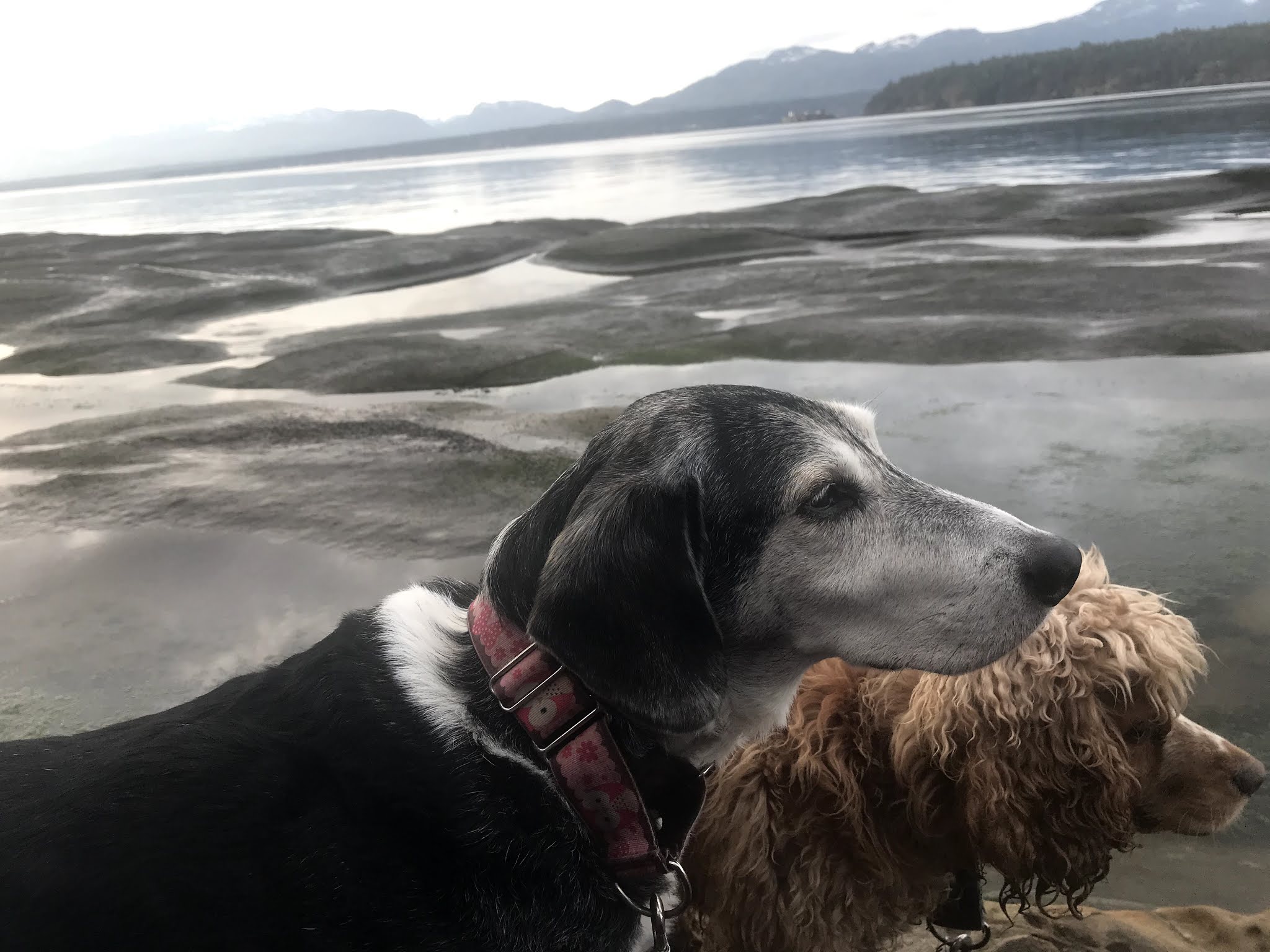
I am very grateful to have received a 2019 "Clawbie" Award for this blog (which reflects the importance of this topic): https://www.clawbies.ca/2019-clawbies-canadian-law-blog-awards/ 

For some of my external writing on this topic, see: 


Friday, January 8, 2021

The Asymmetry of Shame

Shame is a major symptom of complex PTSD.  For me it's the biggest.

Do I love myself? Do I have confidence in myself? Am I at peace with myself? Do I feel secure in my connections to others and in my self-relationship? Do I not care what others think of me? Do I not feel ashamed of the many ways in which I fall short of society's standards (e.g. physical appearance)?

Nope. Nope. Nope. 🤷

Sometimes I try and I'm really good at working around this in many ways, but at my core, I feel wounded, insecure, unlovable, lacking worth etc. It's not something amenable to reason or simply "choosing" to see otherwise. It's deep within me.

The life that's led me here and the experiences that traumatized me forcibly imprinted those messages within me, and then further reinforced them again and again in multiple ways and layers that I'm not going to itemize here. The message that I lacked worth was not only repeatedly imprinted on me in ways that were both highly specific as well as general, but also in ways that involved coercion and trauma to seal them in extra forcefully.

The very essence of my traumas for me is the way they kept reinforcing that message: I'm not valuable. I don't count. I don't count to other people. I don't count to the universe. I don't publicly share the things that happened to imprint this conclusion on me (I've rarely even shared them privately) but I maintain that it's not even irrational for me to feel impelled towards that conclusion as a result. 

My feelings of shame are deep AF. The only way I will every fully uproot them is to completely excavate and heal my trauma in all its layers which quite frankly is unlikely to happen anytime soon if ever. Nor am I willing to wait for it before I can be permitted to be a full member of society.

In complicated ways that I won't share here, my personal shame helped me survive from a very early date. It's not ideal but it's what I had. I was ready to give up and die, but the sense that I wasn't important, that I had to keep going for some purpose beyond myself was the soil from which I was able to keep growing when otherwise my sense of (lacking) self-worth would have led me to surrender. 

And no it's not enough to simply recognize it as an adaptation that's outlived its purpose and cast it aside. There's something existentially real and valuable in how I moved forward that I'm not prepared to surrender for platitudes and affirmations. There's a real complex, painful and difficult problem that needs to be substantively addressed for me rather than set magically simplistically aside. 

That said, I'm also a person who has been surrounded by other people's trauma since forever. And I've seen how people externalized their shame in a way that damaged other people. Whose self-blame caused them to also shame and blame others to whom similar things happened.

So I made a vow early on not to do that: which I've consciously managed for as long as I can remember. All my shame and self-blame will be directed only at myself. I can't eradicate it. That's not possible and insisting that I do so will cause even greater damage. But I also won't conceive of it in any way that leads me to be less compassionate towards others. So I funnel it all towards myself. Not ideal. Not pleasant. But I choose it given the unpalatable options that have been available to me.

So why don't I count? Why am I inherently terrible? It can't be because of qualities I share with others. It can't be because of particular features of my experiences (that others may experience too). It has to simply be because there is something inarticulably wrong about me. The beauty is it means my own shame doesn't lead me to shame others, but it also means I don't gain an illusion of control. I can't distance myself from it. It follows me no matter what I do. I could cure the deadliest diseases. I could be kind and loving to all around me. And it would still be there. Something inexorably wrong with me just for being me. 

So when I feel that my real-world flaws are fatal, but other people with those same characteristics are beautiful and worthy of care, why is that? Why do I feel shame for something I don't think should be imposed as a source of shame in others? Because I'm already so lacking worth to begin with. I can't afford to have flaws. My only hope is to be "perfect" to have any chance of others overlooking all the innate badness in me.

Because I have to be perfect to make up for being me. And even if I'm perfect, it still won't be good enough and I'll be forever terrified, but it's the best that I can do.

Yet of course the inner pervasive sense of badness doesn't limit itself to generalities. It seeps out and makes me feel shame in very particular ways all over the place. It makes me feel susceptible to self-hatred from all kinds of causes, including those that had previously been weaponized against me, and are frequently weaponized against people like me by society.

Shame about our bodies. Shame about our trauma. Shame about not being productive enough. Shame about being needy. Shame about being damaged. Shame about taking up social space. Shame about so many things.

And maybe worst of all for me shame about my shame. 

"Be confident." "Be positive." "Don't succumb to diet-culture-related shame." "Don't let what others think about you affect you." ("or else you have less worth" (implicit message) "Love yourself or you won't be worthy of love:" a message I unpacked and rejected here). 

I know my shame is "wrong" not because I know I don't deserve it, but because I feel deep care for others who share those attributes and experiences. I know those other people who share those attributes and experiences don't deserve it. I know the only one who deserves it (for reasons I don't claim to understand) is me.

My shame is decidedly asymmetrical.

I would never judge someone else for the attributes that often give rise to shame in me. I know my shame is mine.

I can't wave a magic wand and cast off my sense of shame. But the most "healing" thing I can do is also to try not to feel compelled to carry extra shame for my shame. My self-audit of my shame to ensure I don't extend it to others has led me to this conclusion: one of the most exclusionary forces is the double-victimization of people who've been forced to experience shame in the first place. First we suffer the initial damage that makes deep-rooted shame and/or self-hatred unavoidable for some of us. And then, perhaps worst of all, from the people who supposedly "help" and "care" we get an even heavier dose of shame about our shame. "You are wrong and bad to internalize those messages that have been forcibly and repeatedly imprinted on you--to not rise above them." 

And my self-audit leads me to reject that as a valid source of shame too. I can't simply decide not to carry it. It hurts me. But I reject it, the same way I reject the validity of the other sources of shame, even though I can't let it go in myself.

Dear everyone who tells people that they "shouldn't" feel shame, that they "must" learn to love themselves, in a tone that in any way suggests that they are somehow "bad," "deficient" and "less valuable" if they care about the messages that have been weaponized against them (about self-image, etc.), I reject your message too (at least that aspect of it).

I reject that shame. It's the closest I can come to moving towards "healing" right now by rejecting the extra layers that the "positivity police" heap on me and others like me.

I don't share my personal experiences here, but if I did I would challenge others to tell me how it shouldn't affect me deeply. How I should just magically not care about my negative body image when my body-image and insecurities about it were weaponized against me in ways that affected my brain and body on a level that goes beyond my ability to just magically wave away. Maybe some people can overcome it, but not all of us can readily do so, and I reject the blame for that (even though I still carry it). I won't endorse shaming as the proper response to that. 

It's one of the most toxic damaging bases of exclusion in my view: "we don't exclude you because of x, y, z: we exclude you because you let those things affect you. Therefore, we're the real heroes for rejecting x, y, z, and you're the bad one for internalizing it." It's an immense privilege to think it can be that simple. A privilege I don't have the benefit of getting to share.

Nope. Nope. Nope. If you can't care about people in all their confusing asymmetrical wounded-ness with compassion for the paradoxical shame they can't help but carry, there's no moral superiority there. And that's a hill I'm prepared to die on.

As long as we aren't extending our shame to others (which can take work for which I'm prepared to accept responsibility), we deserve compassion and understanding. Not more exclusion and scorn. Until we allow a safe space for that complicated shame to be allowed to exist without judgment, "healing" will never be safe for some of us (at least not for me).


As always, please note that I am a lawyer, not a mental health professional of any kind. I have no expertise in trauma or mental health. Also, please note that any opinions and views expressed in this blog are solely my own and are not intended to represent the views or opinions of my employer in any way. 

I am very grateful to have received a 2019 "Clawbie" Award for this blog (which reflects the importance of this topic): https://www.clawbies.ca/2019-clawbies-canadian-law-blog-awards/ 

For some of my external writing on this topic, see: 


Friday, January 1, 2021

Introducing Resilience Overdose Syndrome

I've written a lot about how I feel psychiatry fails many people with complex trauma. Although I've written very critically (in this post) about one sentence of Judith Herman's "Trauma and Recovery," her book remains essential reading when it comes to complex trauma and proposed a new diagnosis of Complex PTSD. In fact, it's my favourite psychiatry book of all time. I'm not going to discuss all the many concerns I have with psychiatry's failure to respond appropriately in this post. 

All I know is that it's inexcusable to me that all these years have gone by and psychiatry has largely continued to fail to deal with complex trauma in a meaningful responsive way given the concerns that have been raised. But that's a topic for another day. Today I'm just doing me. Psychiatry has not provided a safe system within which I can move towards healing and/or coping. But I need to make sense of my experiences, so I decided to create my own. If it resonates with some people, great. If not, it can be just for me. But I'm reclaiming my right to characterize the essence of my own suffering. 

It's not easy because being a human who is both vulnerable yet also self-determining is super-complicated as I wrote here. But here's what I've settled on as my preferred characterization that most accurately captures what I suffer from: I have "Resilience Overdose Syndrome." (Note: I'm bad with terminology so I'm not sure about the "syndrome" part. I just know it's not a "disorder" or "disease." I'm open to changing that term.) 

[By way of context, for some of my mixed feelings about the concept of "resilience" please see here and here]

Why Resilience Overdose Syndrome? I really want to write lots and lots about it because I have many thoughts, but today is just the introduction of the concept. I'll flesh it out later and welcome input. I've been physically ill lately so I can't aim for comprehensive and perfect posts (when I can manage to write at all) but I don't want to let the perfect be the enemy of the good (or the good to be the enemy of the passably adequate, lol). So here goes.

 -Resilience Overdose Syndrome captures the fact that resilience is both what enabled us to survive the original adversity/trauma we endured, but also highlights the damage to us of being required to be so damn "resilient" for so long. Being required to be resilient in an ongoing way is itself an injury. Resilience is both a blessing and a curse. We don't need more of it. We need to stop being required to have so much of it. We need spaces in which we can relax and lay it down. We need to be able to say "f*** resilience" and have people understand. We need to know that we can be gloriously non-resilient sometimes and still be okay--that a lapse in resilience won't potentially cost us everything because we don't have the luxury others without this condition/situation do of ever being able to just count on the systems and people around us to support us consistently and appropriately. 

-It also highlights a critical point that for many of us the actual harm is ongoing and the original damage is in fact continuing. This is not about us improperly continuing to react to a trauma that is in "the past." The thing(s) that happened to us to cause the original injury may indeed be in the past but the damage is accruing daily as we have to navigate a world that fails to protect us just as it did then, fails to provide conditions for us to be appreciated, included, and healed, and fails to allow us to move through various social spaces with the same understanding and accommodation that so many others can. A world that fails to meaningfully address the harms we suffered and provide truly safe inclusive spaces for those who've been through them. The need for "resilience" is ongoing for many of us. So the damage is continuing. For me that damage isn't materially distinct from the original trauma. The original trauma told me I don't count. I'm not a person whose needs matter. Having to then be required to live in a world that sends the same message is in fact a continuation of the trauma and I'm not wrong to feel it's ongoing. (Note: this won't necessarily be true of everyone who has been traumatized--perhaps some do find that sense of fit afterwards. I'm simply describing my own situation but using "we" because I feel very confident I'm not the only one here). 

-It highlights that what needs to be done to "heal" us isn't about something that needs to be prescribed to us. It's something those who treat and interact with us need to prescribe to themselves (individually as well as to the systems and environments in which we interact). I'm not saying that via the miracle of human endurance (and, yes, resilience) some people might not through a combination of circumstance, strength, and good fortune find ways to situate themselves better so they no longer have to be so resilient, thereby healing themselves. I'm not saying that it may not help us to learn from those shining examples of "resilience" in case what worked for them may resonate with some others and increase their chances of achieving peak transformative resilience. I'm saying those individual accomplishments will never be THE answer, and they're not what our focus should be. What people with my condition need isn't increased resilience but decreased need for resilience in the first place. It's not something we can necessarily always do for ourselves. It needs to be a team effort. So the question isn't how affected people can change so they can heal. It's how we collectively and individually change the conditions in which people interact so they won't need to be so damn resilient anymore. 

So the answer isn't (only) what the doctor should prescribe us, but what the doctor (and the systems within which they work) should do themselves. "You have resilience overdose syndrome. I prescribe to myself and to the system a more flexible and understanding medical system (and social environment) so you have less of a need to be resilient in the future." In the meantime, those of us with resilience overdose syndrome may need to prescribe to ourselves a non-engagement or limited engagement with systems and people that make our condition worse: that impose further damage requiring even more resilience from us. 

None of what I've said is totally new. Others have made similar points and I'll say more in the future but this is just me explaining why I've chosen this label for myself, whether medical professionals acknowledge it or not (spoiler alert: they don't). It's not simple. There's nuance and complexity that I'll explore later. It aligns to some degree with what a lot of "trauma-informed" folx are already saying (although I find many still end up lapsing into old ways of thinking that don't work for me; I'll elaborate on this later with my concerns about the framing of concepts like "emotion dysregulation" etc.--that I feel are corrected by my personal framework). 

Anyway that's just a tiny sneak preview of my new way of self-identifying. In the meantime, maybe 2021 can be the year we can safely declare (if we wish to): f*** resilience! 


As always, please note that I am a lawyer, not a mental health professional of any kind. I have no expertise in trauma or mental health. Also, please note that any opinions and views expressed in this blog are solely my own and are not intended to represent the views or opinions of my employer in any way. 
I am very grateful to have received a 2019 "Clawbie" Award for this blog (which reflects the importance of this topic): https://www.clawbies.ca/2019-clawbies-canadian-law-blog-awards/ 

For some of my external writing on this topic, see: